
Inside the POLIscope Launch & 2026 Strategic Horizon on Global Agendas
February 25, 2026
On Saturday, February 21, over 40 participants gathered both in-person and virtually for the official launch of POLIscope Institute, a new think tank born from the Erasmus Mundus Joint Master’s International Law of Global Security, Peace and Development (ILGPSD). In a global landscape defined by the erosion of consensus and multilateralism, the launch marked the arrival of a new voice dedicated to bridging the gap between academic knowledge and the realities of policymaking.
A Mission to Unite Perspectives
Opening session, Communication & PR Coordinator, Cathlynne Banda, articulated the foundational vision of the institute. Born from a desire to foster a vibrant intellectual community across the ILGSPD cohorts (and its predecessor ILSPSD), POLIscope was created to unite diverse perspectives - international law, political science, international relations, sustainability science, etc - into a cohesive lens.
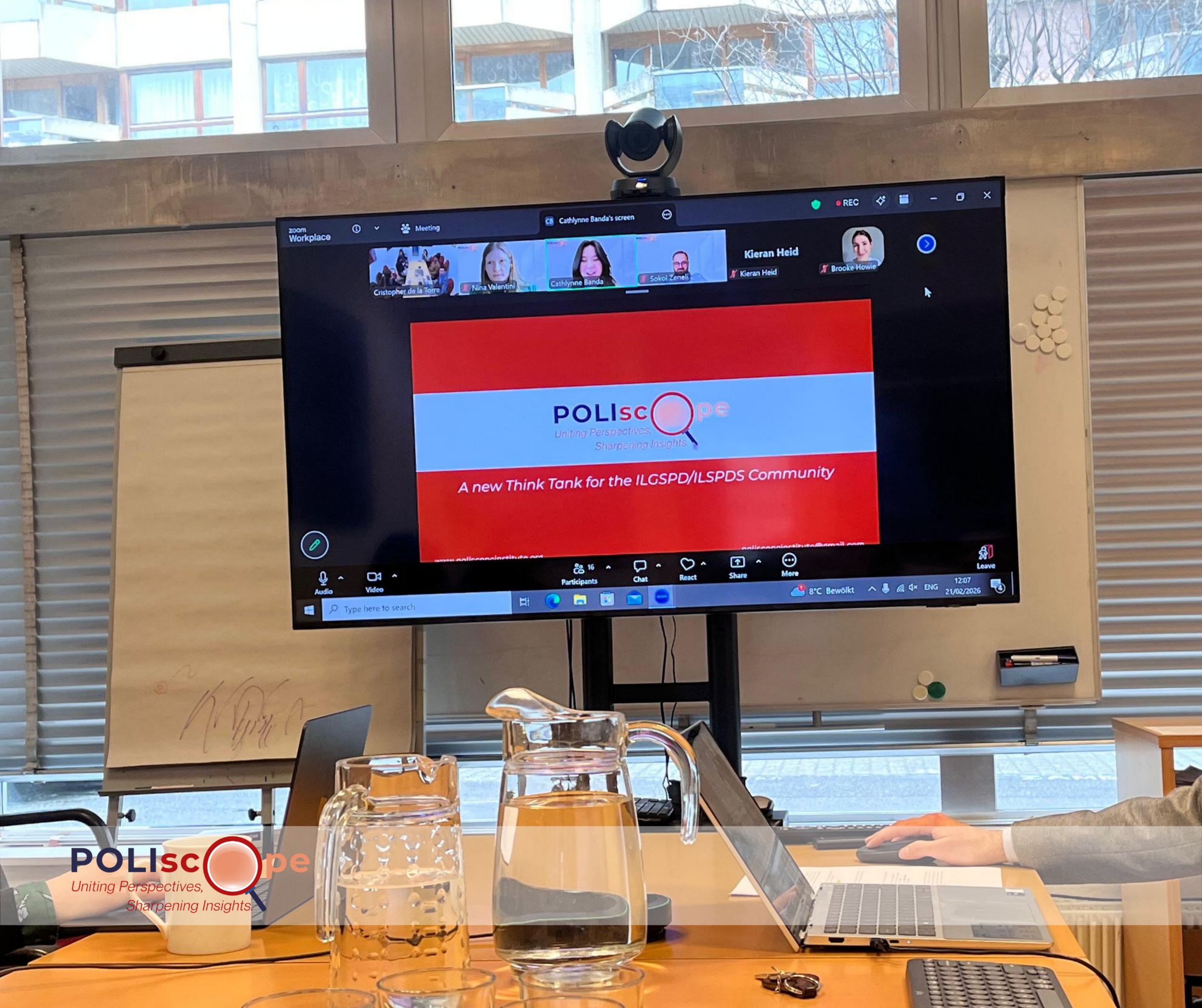
“We wanted to create research that truly bridges the gap between our lived experiences, our academic insights, and real-world challenges,” Banda stated, noting that the name - POLIscope - itself blends the words “policy” with “kaleidoscope” to reflect the complexity of the issues at hand.
Panel Discussion on the 2026 Global Affairs Trends
After the presentation, the team started with the Panel Discussion on the 2026 Global Affairs Trends, unpacking the findings of our flagship commentary “Strategic Horizon 2026: Global Agendas and the Forces Reshaping Them”, moderated by Cristopher de la Torre, Thematic Editor of Sustainable Development & Environmental Justice at POLIscope.
Initiating the discussion, Prof. Asli Ozcelik Olcay, Senior Lecturer in International Law and Programme Director of ILGSPD Programme at the University of Glasgow, grounded the discussion with a critical systemic analysis. Pushing back against the popular narrative of ‘institutional’ zombification of the UN, arguing that while the UN faces an existential funding crisis, dismissing it is a dangerous luxury. “It is the only alternative that we have right now,” she reminded the audience, warning against ‘historical myopia’ regarding past crises.
Relying on the POLIscope Commentary, Sokol Zeneli, Chairperson of the Managing Board, outlined a grim trajectory for state sovereignty. Analysing the recent US intervention in Venezuela, Zeneli brought to the discussion the ‘Donroe Doctrine’ - what he called, a militarised revival of the Monroe Doctrine.
“We are entering an era of ‘graduated sovereignty’,” Zeneli argued. In this new order, a state’s borders are no longer absolute rights but variables contingent on their alignment with regional or global hegemons.
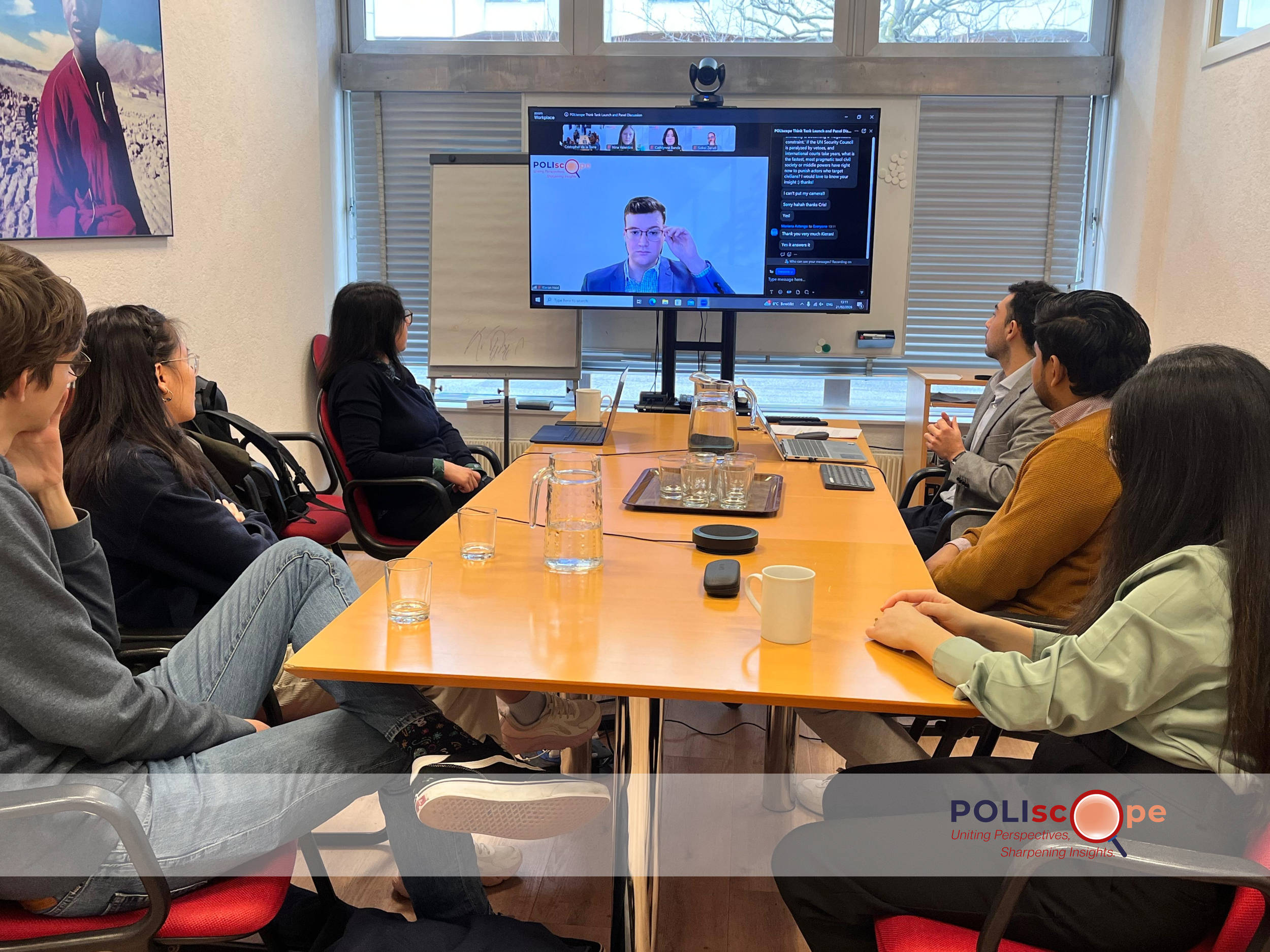
He illustrated the precarious position of small States through the concept of ‘multi-alignment’, describing it as “walking on eggshells” where States must constantly recalibrate their strategies to survive between competing powers, highlighting the case of South East European countries and the necessity for them to compete between powers like the EU, US, Russia, China and Turkey.
Acknowledging this issue, the discussion then shifted to the human collateral of these high-level shifts.
Kieran Heid, Board Member, highlighted a subtle but structural erosion of International Humanitarian Law (IHL). While the rules remain binding, he warned that AI-enabled targeting systems are compressing “meaningful human verification,” risking a future where proportionality becomes a procedural checkbox rather than a substantive check on violence.
Returning to the floor, Cathlynne Banda analysed the EU Pact on Migration and Asylum, warning that political discourse is constructing migrants as a “security threat” rather than a human reality. She raised specific alarms about the expansion of Eurodac and Eurosur, arguing that these surveillance tools risk normalising racial profiling and algorithmic bias at Europe’s borders.
The discussion also explored how the planet’s baseline survival is being subordinated to hard power competition.
Nina Valentini, Board Member, pointed out a glaring paradox: military spending is at an all-time high, yet the sector - responsible for an estimated 5.5% of global emissions - remains largely exempt from reporting. She emphasised that legal obligations, such as the “due diligence” to prevent harm, do not disappear during war, citing the recent ICJ advisory opinion as a tool for civil society accountability.
On the other hand, with the UN Water Conference approach in December, Fahim Abrar Abid, Board Member, argued that funding is only half the battle. The deeper issue, he contended, is “knowledge asymmetry”. He called for radical transparency in shared river basins to prevent upstream neighbours from weaponising data, ensuring water remains a “shared lifeline” rather than a tool for hydro-hegemony.
Closing the session, Prof. Asli was invited to offer final remarks on the discussion and advice moving forward. She warned against the trap of repeating the past mistakes by doubling down on securitisation, arguing that “Securitisation won’t generate more security for anyone.” She cautioned that hardening borders without addressing economic or climate justice is a fundamentally “bad investment” that fails to deliver even its own stated objectives.
Ultimately, regarding the future of global institutions, Prof. Asli advised against defending them "as they are."
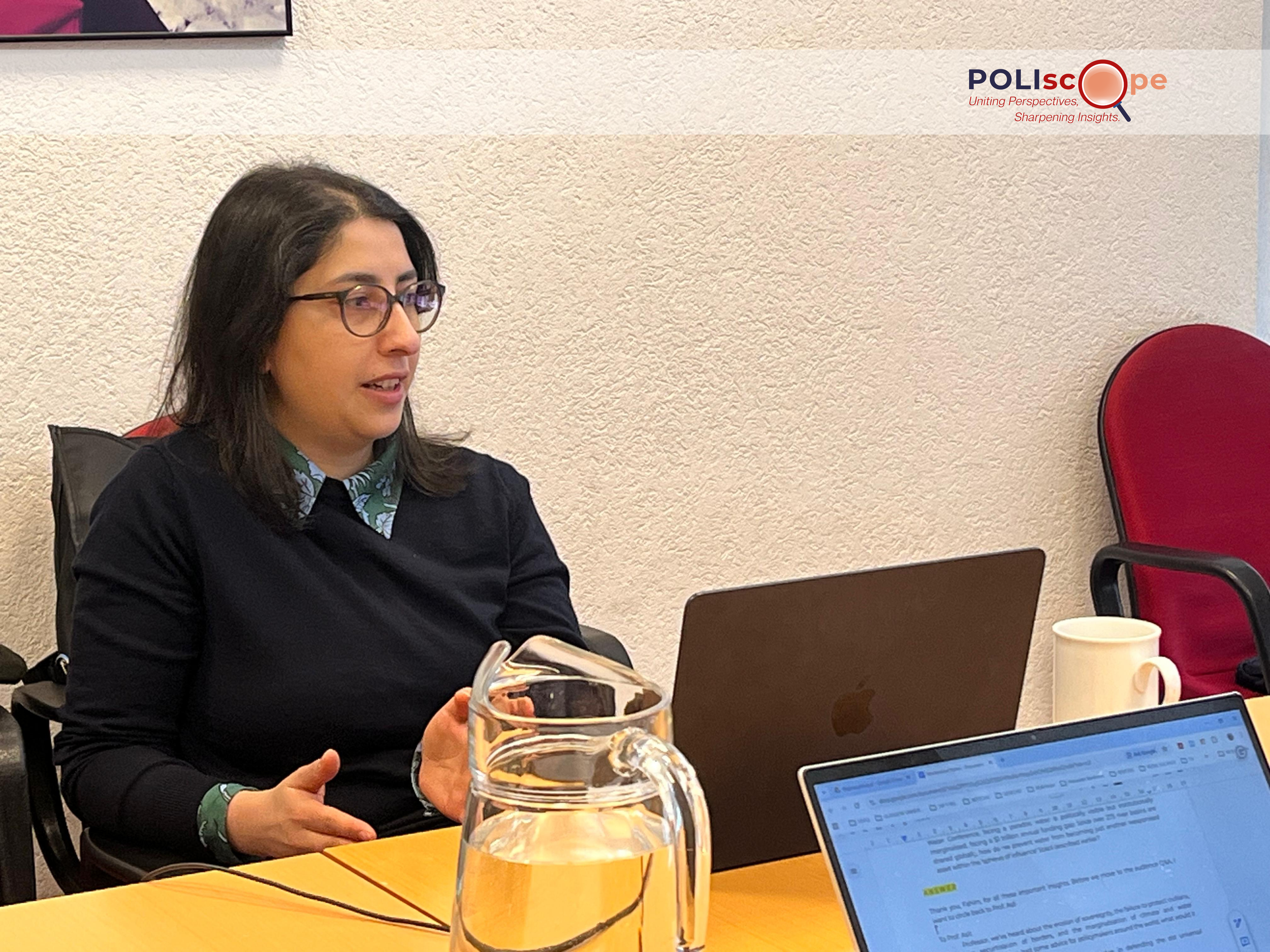
Instead, she urged the audience to protect the idea of multilateralism, pointing out that in technical sectors like aviation and telecommunications, international cooperation remains robust and indispensable. The task for 2026, she concluded, is to preserve these functional "pockets" while reforming the political structures that have lost the world's trust.
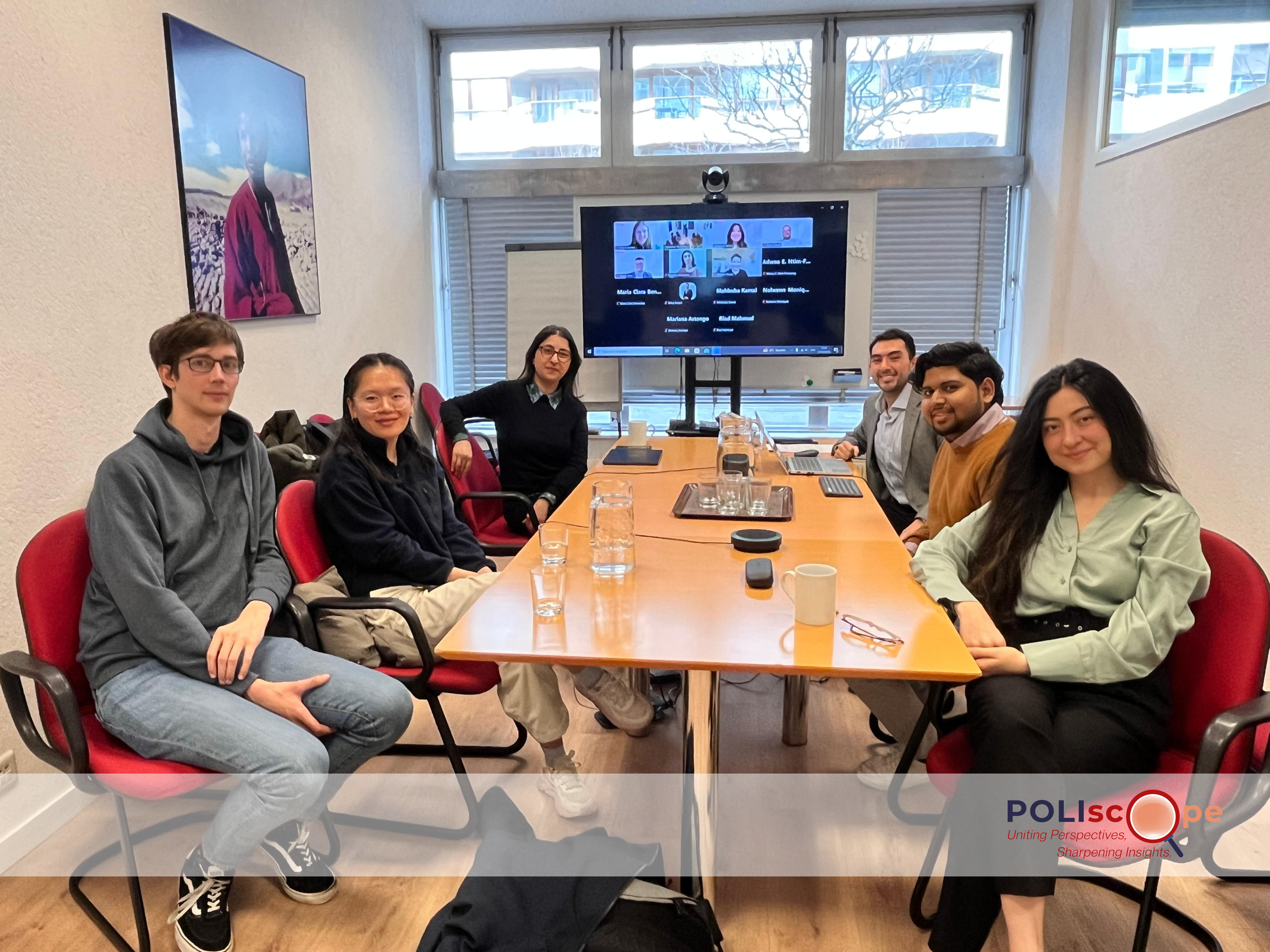
As POLIscope moves forward, its mission is clear: to map these "pockets of effectiveness" and provide the sharp, interdisciplinary insights needed to navigate a fractured world.